Video · Worth the Trouble?
Worth the Trouble? is our new explainer series
A researched series about strange resources and promising ideas, and what it would actually take to use them. Six videos are up so far.
 No. 10
We keep running into the same kind of story. Something sounds almost too useful to be real, and most of what you read about it is how much it could change. We wanted to make videos about the next question, the one that tends to get skipped: what would it actually take to use this thing?
That's Worth the Trouble? Each episode picks one strange resource or promising idea, explains why people care about it, and then spends real time on the hard part. The goal is for you to understand it. We're not trying to tell you a technology will save us, and we're not trying to tell you it's doomed either.
The long episodes run about eight to nine minutes. Most of them come with a couple of Shorts, and each Short tells a whole small story on its own, so you don't need the long version for it to make sense.
Where it came from
The series grew out of our helium-3 video, The Most Expensive Gas You've Never Heard Of. That one found a shape we liked: start with something odd, give one concrete reason it matters, then bring the catch in early instead of saving it for the last thirty seconds. Moon dirt turned out to have another strange thing in it, so ice at the Moon's poles became the first episode. Corey picked the name on October 30.
Five topics we’ve covered
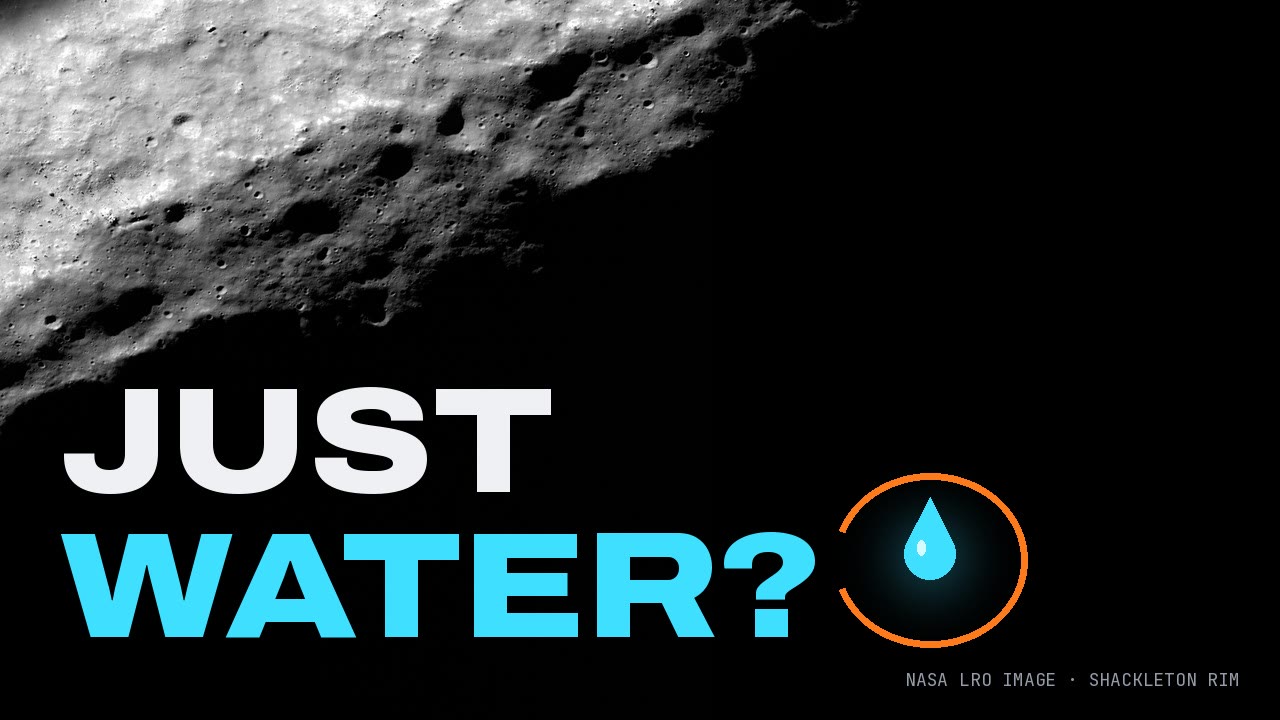
Moon ice. There's real ice at the Moon's poles, and it may be the most useful thing up there. That's because of where it is, not because it's rare. The catch is that the same darkness keeping it frozen is what makes it so hard to reach.
Fusion. In December 2022, a lab in California got more energy out of a fusion target than its lasers put in. So why isn't fusion powering anything yet? We keep widening the box, from a tiny fuel capsule to the laser facility, to a plasma, to a whole power plant that has to make its own fuel and survive what fusion does to its walls.
Psyche. There's an asteroid between Mars and Jupiter with a reputation as a giant chunk of metal, and it's easy to picture it as treasure. We don't actually know exactly what it's made of yet. NASA's best estimate is that metal makes up about 30 to 60 percent of its volume, and a spacecraft is on the way to find out.
Helium. You may have heard we're running out of the party-balloon gas. The real story is about supply. We follow one gas line from the rock to an MRI magnet and around a recovery loop, because what happens after one use matters as much as how much is in the ground.
Weight-space programming. This one isn't about a physical resource at all. On November 2, a team at MIT CSAIL posted about asking a big AI model to read and rewrite the raw numbers inside a small one, with no training. A small model's score on a hard math test went from 7.9% to 48.1%. Our episode went up the next day, and it keeps the same question. The team's own catch is that it removed an obstacle and didn't add any new math skill.
The full playlist has all six videos.
How we try to keep it honest
Every claim in a script gets tied to a source before the video is made. For the fusion episode, we went back to the Department of Energy and Lawrence Livermore headlines and quoted them word for word. For weight-space, every claim sits next to the blog post's own wording in our notes, so we could check that we didn't stretch it.
We also try to keep what's been observed apart from what's an estimate and what's only a plan. Real imagery, scientific visualization and our own diagrams aren't the same thing, so we label the ones that are conceptual.
Sometimes that costs us a good line. An early pitch for the first episode called the Moon's ice the most valuable ice in the solar system. It was a great hook, but nobody has established a ranking like that, so we dropped it. On Psyche, a lot of the fun of the subject is the idea of a price tag, and we can't honestly put one on it. So the episode uses a paper specimen tag instead, and it only ever gets what we actually know.
What it isn't
These are explainers from a small studio, not papers, and we aren't scientists at any of the labs we cover. Some of what we talk about is early. The weight-space result comes from one team's blog post, it isn't peer reviewed, and we say so in the video. Mission dates and plans can move, too, so treat those as plans.
If you watch one, start with whichever subject you've always wondered about. They don't need to go in order. And if there's something you think deserves the same treatment, leave a comment on any episode and tell us. We read them.