Game · Showrunner
We made a cozy game about running a show night
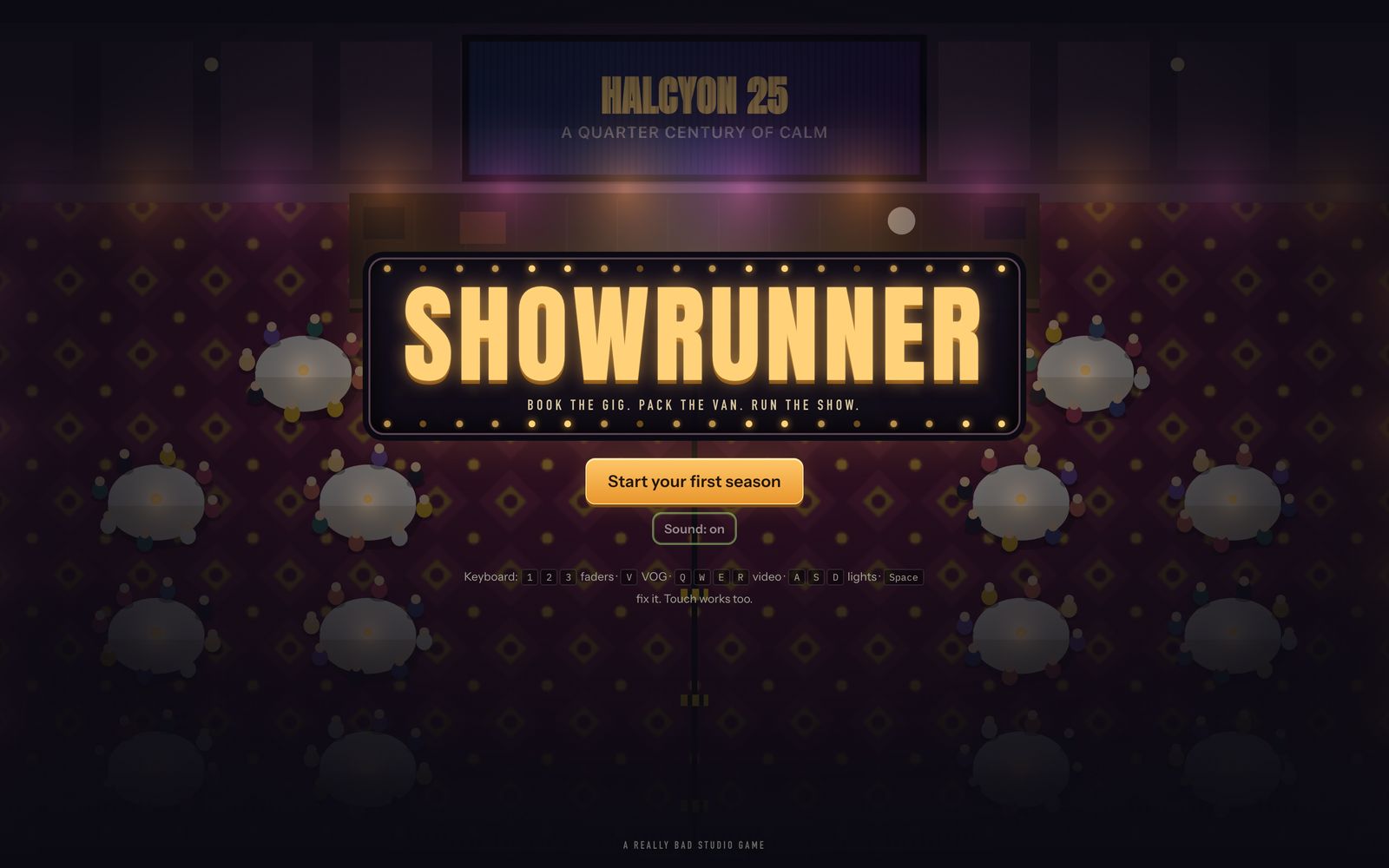
Showrunner is a free browser game about running a small live-production company. Book the gig, pack the van, ride the faders while things go wrong.
 No. 01
If you've ever worked a live event, you know the feeling. The run of show says one thing, the client says another, the wireless mic picks this exact moment to squeal, and somehow the room never notices. That's the night we wanted to put in a game.
Showrunner is a cozy game about running a small live-production company. You book the gig, pick your crew, pack the van, run the show from the desk while things go wrong, strike, get paid, and do it again with a slightly better van. It plays in your browser, on a laptop or a phone, and it's free.
How a gig goes
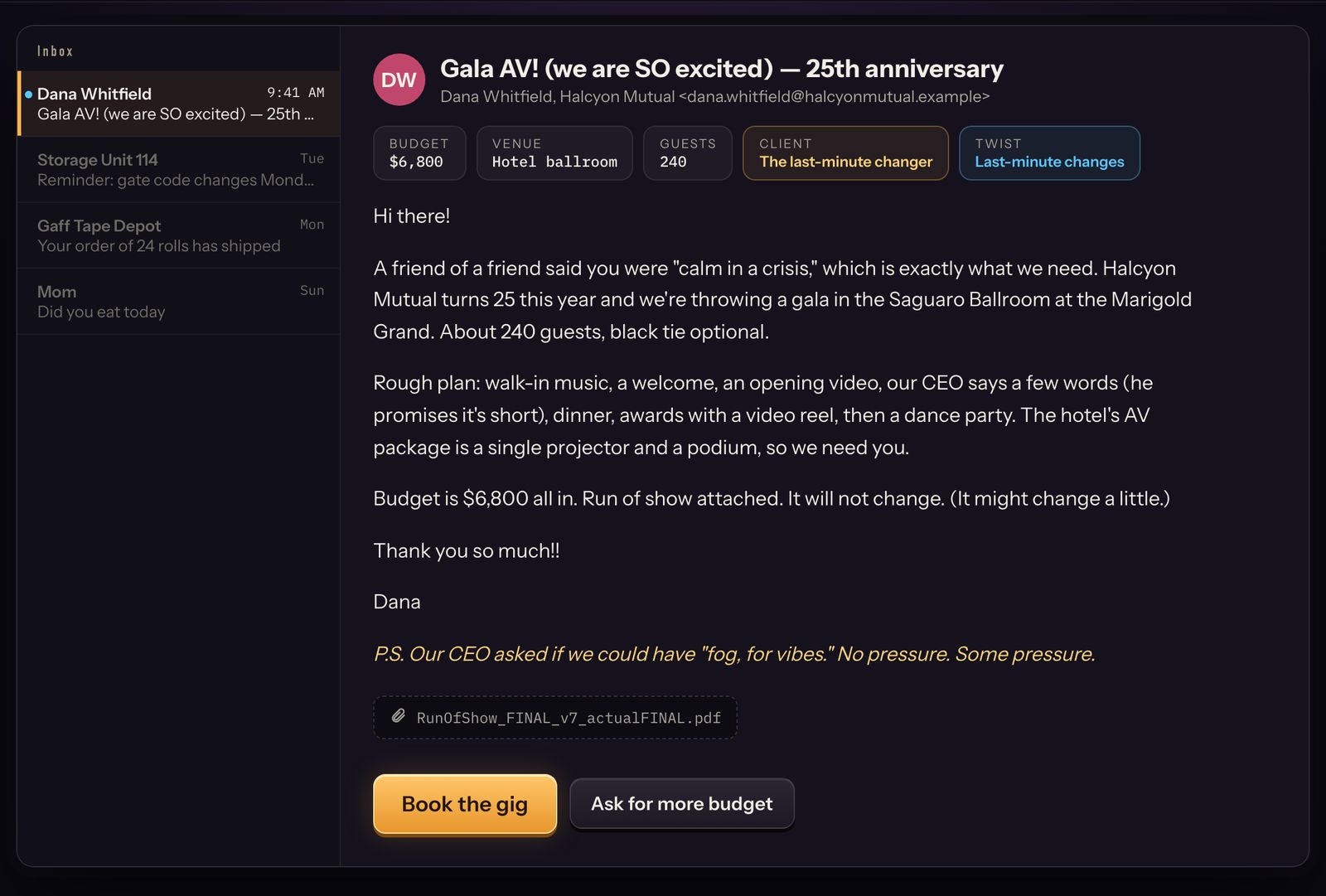
Every gig starts the way real ones do: with an email. Somebody is SO excited. The budget is fixed. The run of show is attached and it will not change. (It might change a little.)
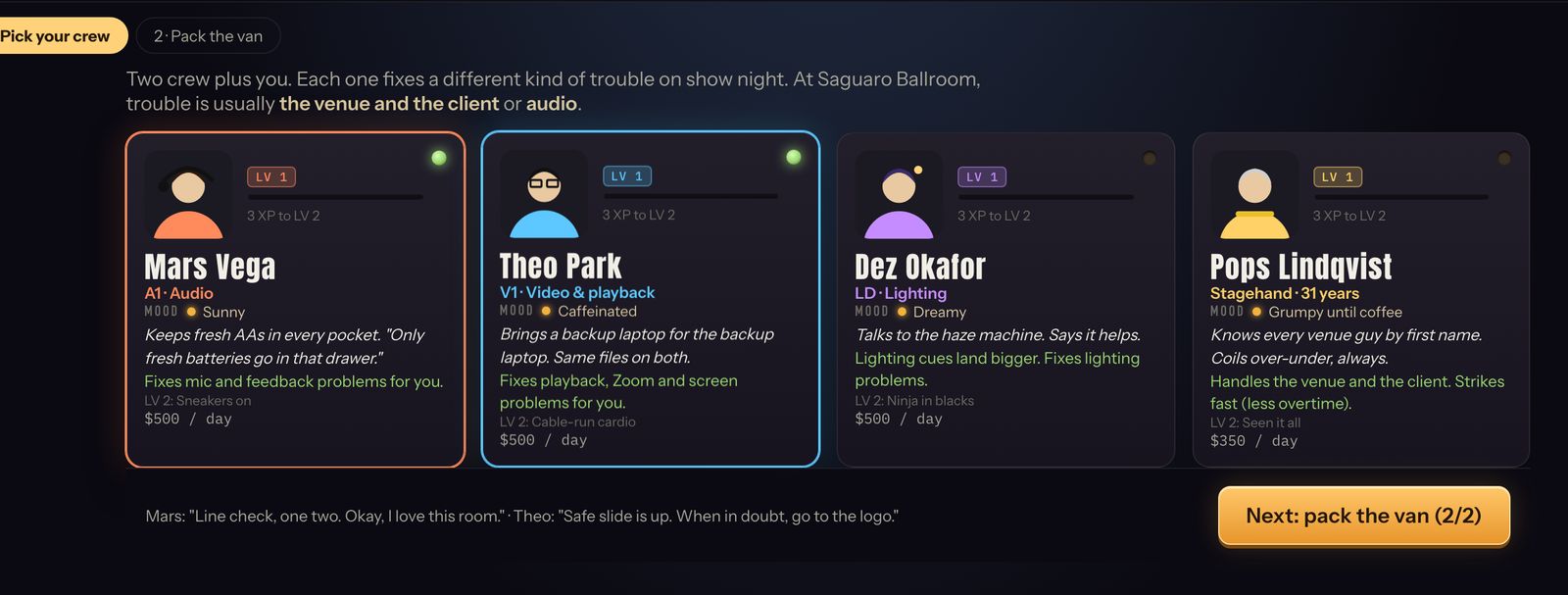
You pick two of four crew to bring with you. Each one handles a different kind of trouble on show night, and each has a mood, a day rate and an opinion about coffee.
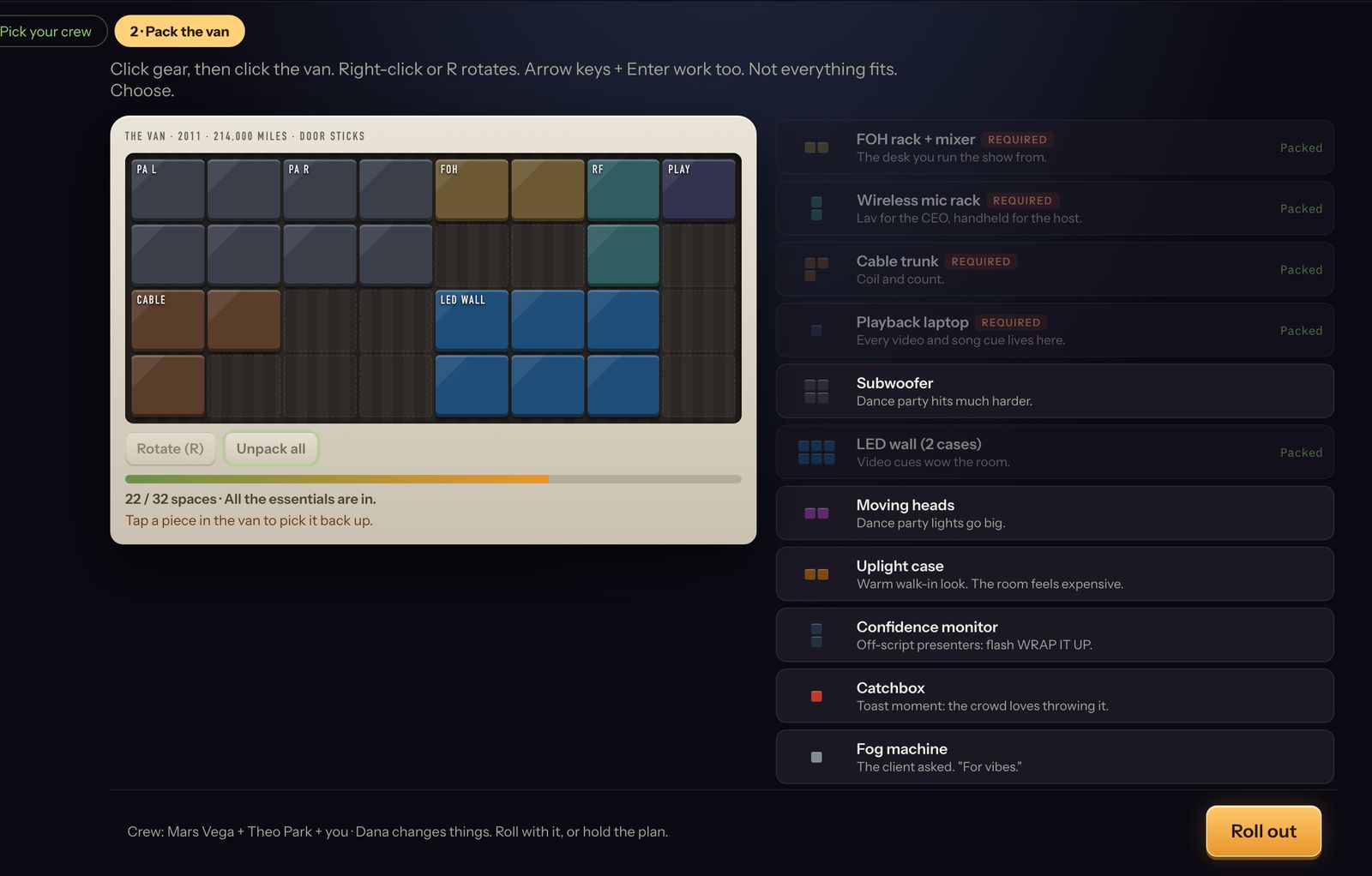
Then you pack the van. It's a little puzzle: rotate the gear, fit the essentials, and decide whether the fog machine is worth the space. (The client asked. For vibes.)
Show night
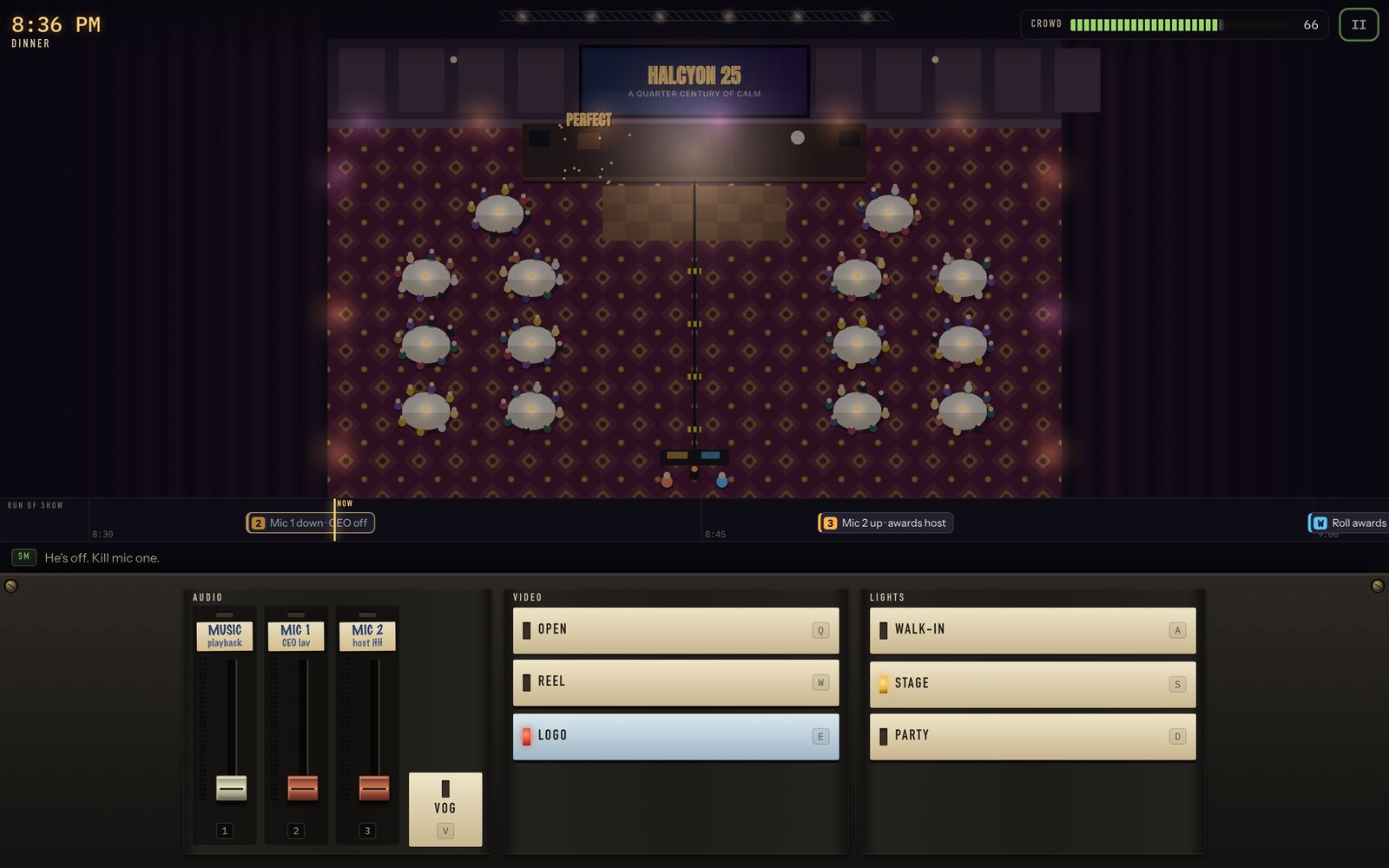
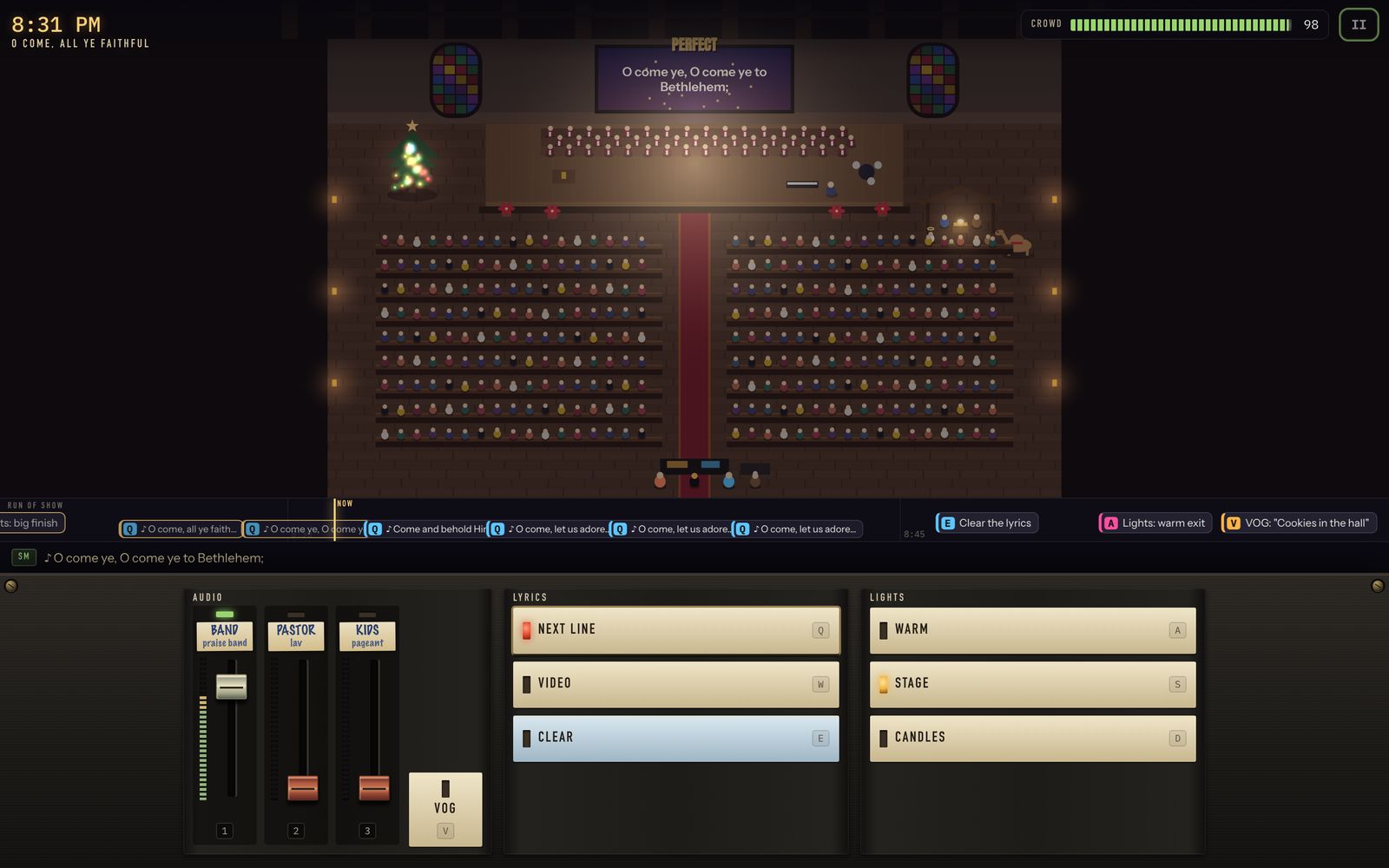
Show night is three minutes at the desk. Cues slide toward NOW, and when one gets there you hit the control that glows: bring up a mic, roll the video, change the lights. The fader really is the volume.
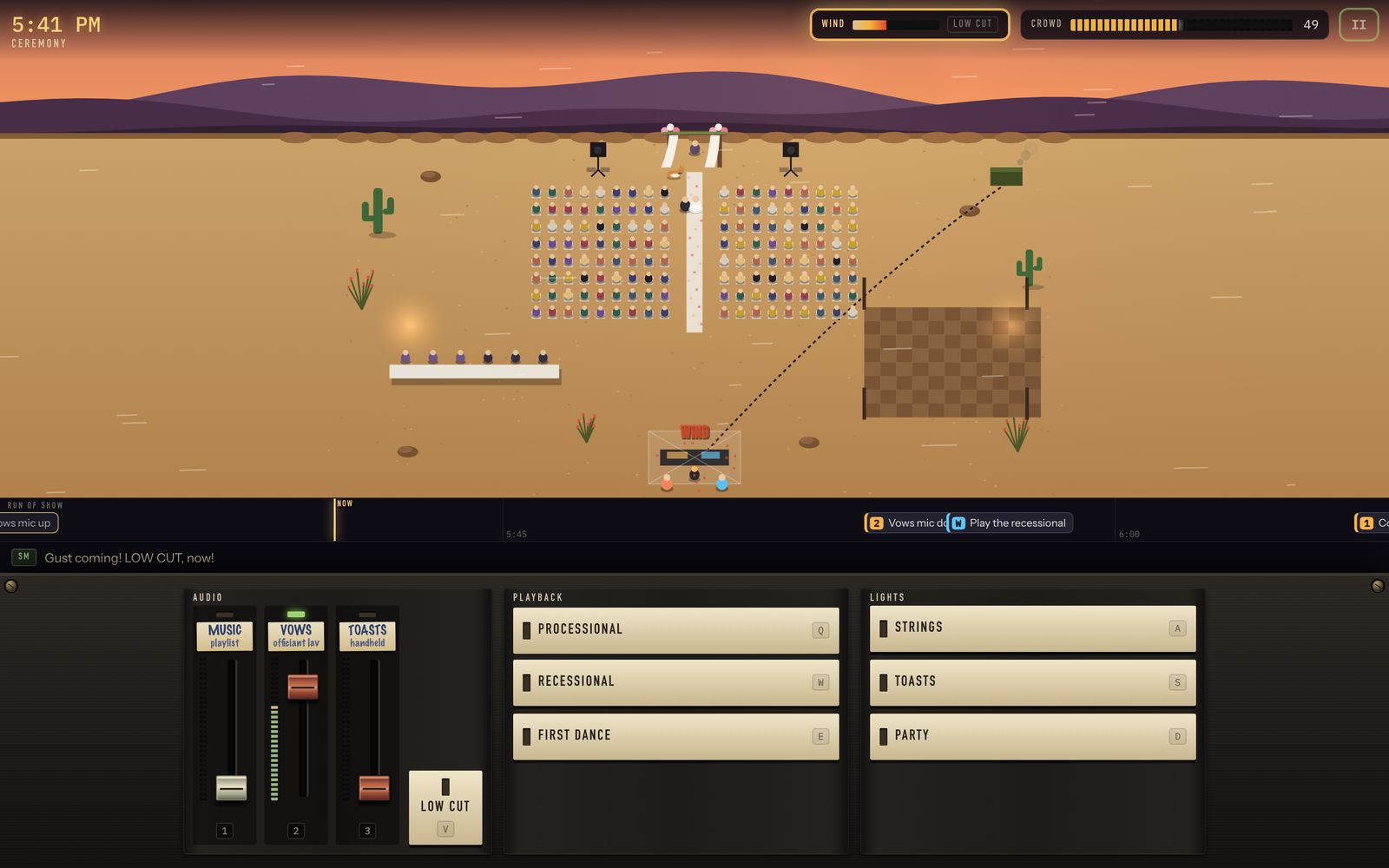
Then three problems interrupt. Feedback on the handheld. A gust on the bluff. The keynote speaker who wanders off his mark. Your crew can fix the ones they're good at, and you handle the rest.
There's no fail state. If you miss something, the hotel AV guy fixes it, and he'll tell the story for years. We wanted to keep the adrenaline of a live show without punishing you for it.
Four gigs, four rooms
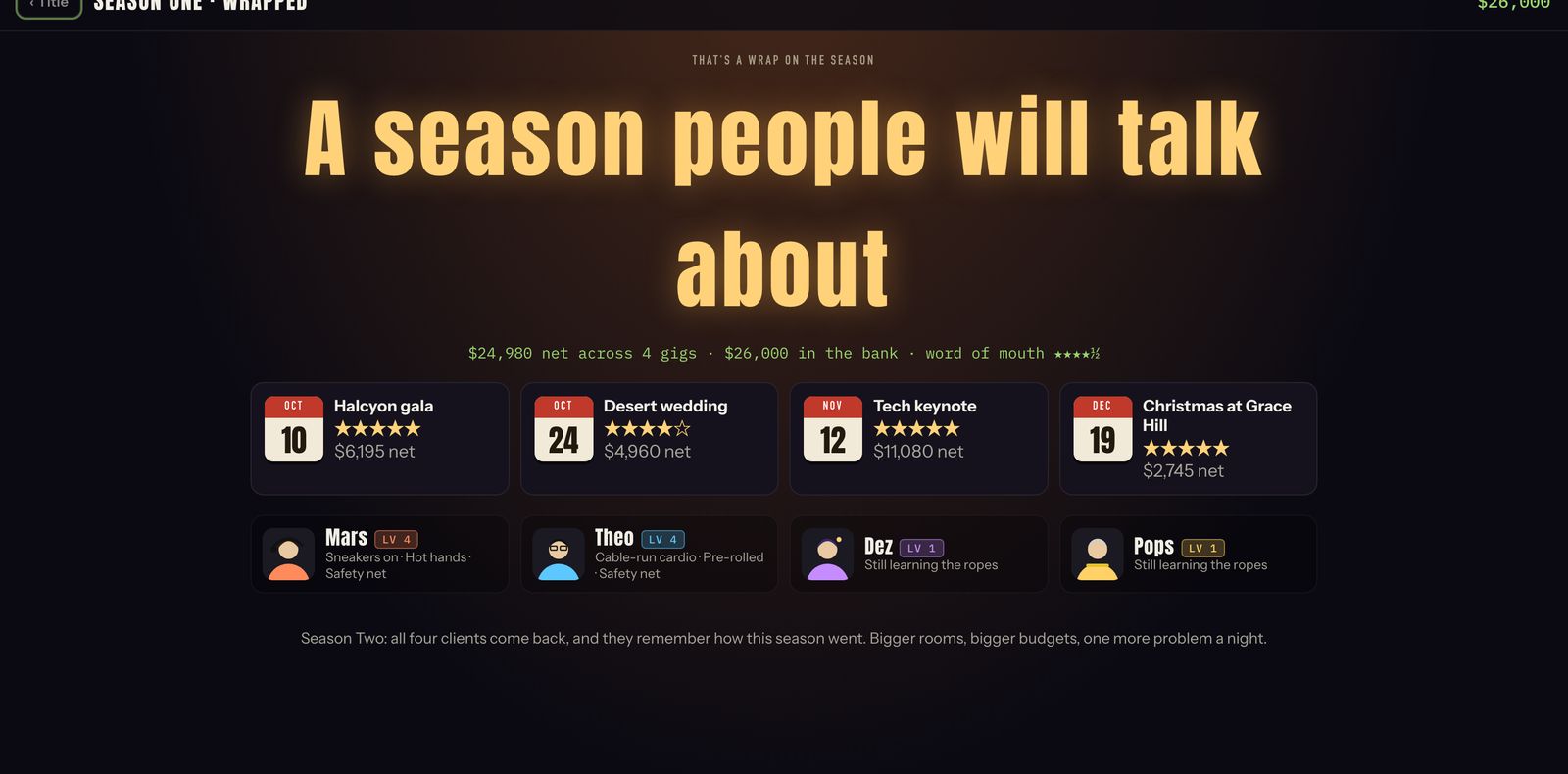
A season is four dates on the calendar, and each one is its own room with its own problem:
- A 25th anniversary gala in a hotel ballroom, where the planner changes the run of show mid-show.
- A wedding on a desert bluff at sunset. The wind picks up, so you ride the LOW CUT.
- A tech keynote with four cameras, where you cut to the one the founder is actually standing in.
- Christmas at a church, with live carol lyrics, a children's pageant and 400 candles for Silent Night.
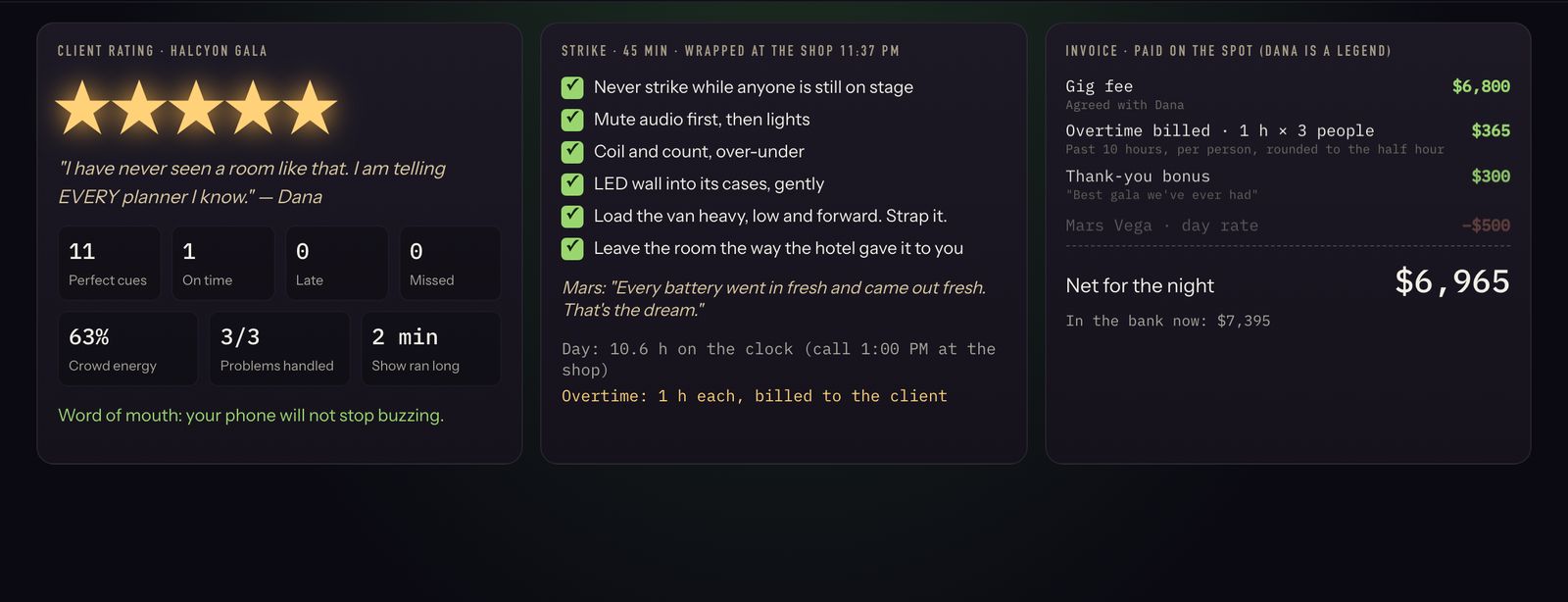
After the show you strike, and the checklist reads like a real one: never strike while anyone is still on stage, mute audio first, then lights. Then you get paid. Overtime follows a real rule too: the day is ten hours from crew call to gear back.
Between gigs there's a gear shop, a crew that levels up, and clients who remember you. Play the whole season and they all come back for Season Two, with bigger rooms and one more problem a night.
Why we made it
Really Bad Studio and SPRK Productions, a live-event production company, are run by the same person, so show days are something we know pretty well. The gags in Showrunner are the kind of thing anyone who works events will probably recognize: the planner who's calm in a crisis, the volunteer sound man who has "a system", the PDF named FINAL_v7_actualFINAL. All the names and clients in the game are made up.
A few of the studio's own things show up in the shop, too. You can buy a Studio 48 recording rig and put SPRKplug on the playback laptop.
How it's built
A few notes for the curious:
- No game engine. It's TypeScript and Vite. The menus and the desk are plain HTML, so text stays crisp and touch and keyboard work everywhere. The rooms are drawn on a canvas.
- Every sound is made in the browser with Web Audio. No samples. The feedback squeal is real feedback math, and the wind roars through any mic you left open.
- The show night is a small, testable simulation, and each gig is just data, which makes new rooms quick to add.
- We test it like we play it. An automated run plays the entire season, all four gigs, in desktop Chrome and on an iPhone-sized screen.
We started Showrunner on 1 October 2026 and it was playable the same day. It's at build 0.2 now, a short first season, and it'll keep growing.
If you've ever stood behind a desk at a gala, a wedding or a Christmas service, we think you'll recognize a lot of it. And if you haven't, we hope it gives you a little taste of what show night is like. We'd love to hear what you think.